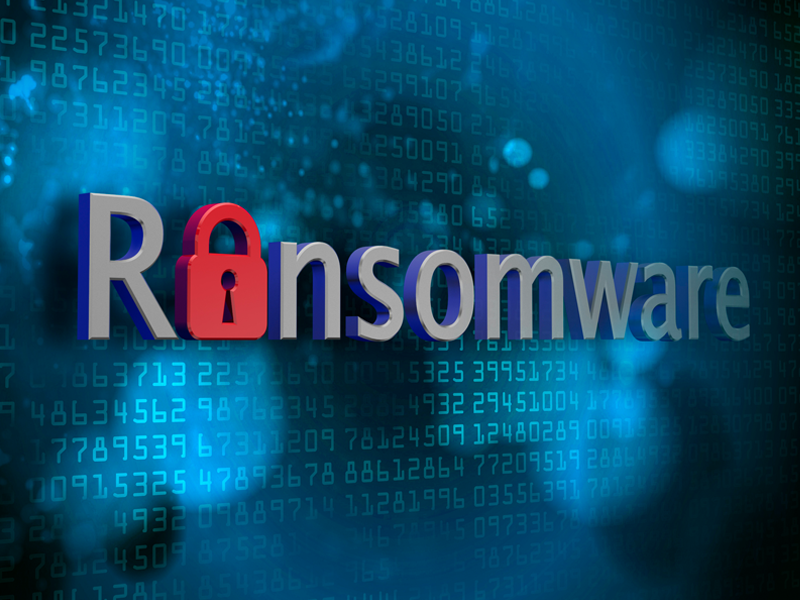
No organization intends to be hit by a ransomware attack. A successful attack can make it impossible for users or customers to access critical systems for an extended time. In a worst-case scenario, a business can be forced to close after a ransomware attack.
Unfortunately, simply not wanting to deal with ransomware is not enough to actually protect your business. Unscrupulous threat actors are constantly searching for new methods to introduce dangerous malware into your IT environment. They only need to be successful once in a while to meet their goals. However, your business cannot afford a single incursion.
If your company is not following security best practices, you are playing with fire. The following are brightly flashing warning signs that your business is one click away from a ransomware incident. Ignoring them puts your business at unnecessary risk.
Unpatched Systems and Applications
Hardware and software vendors develop security patches to address known vulnerabilities in their products. Threat actors are also aware of these vulnerabilities, and will exploit them to take the easy route into your IT environment. All of your servers, network devices, operating systems, and applications that have not been patched present easy targets.
Teams must patch all systems to protect the environment effectively. While it is typically seen as more important to address business production systems, test and development systems must also be patched. Hackers can gain access to the infrastructure through a test server’s weakened defenses and move on to infect critical systems and applications.
The solution to this problem is to implement a formal patch management process that applies software updates as soon as they are available and across the entire infrastructure. Companies should have defined patching windows that address the vulnerabilities while minimizing the impact on business operations. A single weak link can be used to compromise your environment by a ransomware attack.
Inadequate Network Segmentation
Attackers can exploit a flat network architecture by compromising a single device and moving laterally across the infrastructure. Many organizations try to protect vital resources with stronger authentication protocols but neglect to segment the network due to the added complexity or cost. Sophisticated threat actors can exploit this oversight to wreak havoc on your IT environment.
Companies must address this problem by rearchitecting their environment to segment critical and sensitive applications and data from the rest of the infrastructure. The segmentation should include the backup network and storage, which are attractive targets for advanced ransomware attacks. Teams can implement more stringent security measures to safeguard their business systems and sensitive data while minimizing the impact on general user devices and day-to-day operations with efficient network segmentation.
Weak Credentials and Authentication Procedures
Bad actors can exploit weak access and authentication protocols to gain entry to the environment. A single compromised access point can serve as the starting point for a full-blown ransomware attack. Common weak credentials that are often attacked include:
- Shared logins used by multiple employees;
- No multi-factor authentication (MFA) on critical accounts and services;
- Simple passwords with no enforced rotation policy;
- Default passwords on network devices or infrastructure components.
Organizations need to address this issue by:
- Eliminating shared passwords;
- Changing the default vendor password on hardware or software components;
- Enforcing password complexity and rotation policies;
- Implementing MFA on admin, VPN, email, and remote access accounts at a minimum.
Excessive Privileges
Accounts with excessive privileges pose a greater danger if they are compromised. Examples such as service accounts with broad permissions across the network or employees with local admin rights on their laptops can serve as a springboard for malicious actors to corrupt data or plant malware.
Companies should address excessive privileges to protect themselves from both external and internal threats. Teams should follow the principle of least privilege, where employees’ permissions are tightly aligned with their role requirements. This principle minimizes the risk of unintentional insider incidents and makes it more difficult to conduct a ransomware attack.
Lack of Phishing Awareness
Threat actors are continually refining their phishing techniques to develop new methods that trick unsuspecting employees into divulging sensitive information, including login credentials. Individuals may click on embedded links or open attachments without giving it a second thought. This type of activity is an extremely dangerous practice that can compromise an otherwise well-constructed security posture.
Companies cannot address this issue with purely technical solutions such as better firewalls or authentication procedures. Employees must receive regular security awareness training designed to identify new phishing and social engineering attacks that can introduce ransomware into the environment. Organizations should develop a comprehensive reporting process for suspicious emails to ensure all stakeholders have the information needed to avoid malicious phishing attempts.
Insecure or Untested Backups
Many modern ransomware attacks do not simply focus on encrypting a company’s business-critical systems. They also attempt to corrupt or delete backups, forcing an organization to pay the ransom to regain access to their data. Backups stored on the same network as business systems can also be encrypted by ransomware, highlighting the importance of segmentation.
Companies can protect themselves by taking several steps regarding their backups.
- Teams must keep a set of offline, immutable backups to facilitate ransomware recovery.
- Backup schedules must align with operational considerations to avoid gaps in recoverable data.
- Organizations should regularly test backups and backup procedures so they are prepared if an attack occurs.
How VAST Can Help Minimize Your Ransomware Risk
VAST IT Services understands the risks of a ransomware attack and has multiple services designed to help protect your IT environment.
- Our teams can help you develop and implement a secure architecture that includes network segmentation to keep critical systems away from the larger IT infrastructure.
- VAST’s Cloud Backup-as-a-Service (CBaaS) and Disaster Recovery as–a-Service (DRaaS) offerings create immutable backups that are accessible from anywhere to recover your systems after a ransomware attack.
- Our Security Lifecycle Review provides you comprehensive knowledge of how your users interact with data and applications so you can eliminate vulnerabilities.
Talk to our team of experts today and start protecting your business from advanced ransomware attacks.